Bartosz Cichocki: I Believe in a Europe of Homelands, Not a United States of Europe, by Sebastiano Giorgi
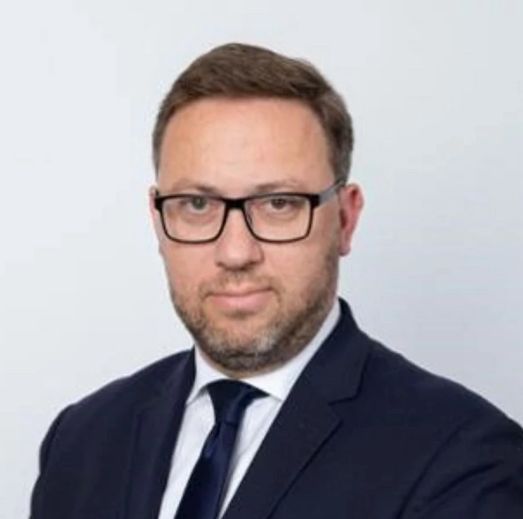
Bartosz Jan Cichocki is a historian by education, a former diplomat, and a specialist in Eastern European affairs. From 2017 to 2019, he served as Undersecretary of State at the Ministry of Foreign Affairs, and at the time of Russia’s full-scale aggression in 2022, he was the Ambassador of the Republic of Poland to Ukraine.
What happened in the first days of the war? You were one of the few ambassadors who remained in Kyiv.
I wasn’t the only ambassador who stayed. The Italian ambassador, Pier Francesco Zazo, my friend, also remained, among others. Many ambassadors wanted to stay, but their governments ordered them to leave the country. At the end of 2021, I assumed that war would break out, so I began preparing the embassy for evacuation and for operating in crisis conditions, assuming we might lose access to shops, water, electricity, or the Internet. About a week before the invasion, we received classified information that war was inevitable. So, I organized the departure of embassy staff families from Kyiv. The airports were still operating, so within a few days, several dozen people, including children, left Ukraine. Other embassies didn’t do this and later found themselves in a much more difficult situation.
Poland was probably one of the few countries that believed from the start that war was very likely, while many others didn’t believe in such a scenario. In your opinion, were there moments when it could have been avoided?
The only way to avoid war would have been to accept the conditions imposed by Russia. This would have meant limiting Ukraine’s sovereignty, forcing the United States to make concessions in Europe and NATO, and accepting Moscow’s right to co-decide on our affairs – essentially a return to the situation before the Alliance’s expansion in the late 1990s. These were completely unacceptable conditions. For this reason, full responsibility for the outbreak of war lies solely with Russia, which decided to use armed force to impose its political will, thereby violating international law. The day before the invasion, Polish President Andrzej Duda and Lithuanian President Gitanas Nausėda were in Kyiv. We had very serious talks with President Zelensky. It was a clear signal of solidarity with Ukraine. For several weeks, Poland had been mobilizing its partners to support Ukraine and provide weapons, including Polish Piorun man-portable air-defense systems, which later played a significant role in the defense of Kyiv. Many of our partners were convinced that Ukraine would fall within days, while we tried to convince them that it was worth supporting. At the same time, I was aware that Ukraine was not adequately organized to repel an invasion of this scale.
Today, after four years of war – a conflict lasting longer than World War I – how has your perspective on this conflict, and on Ukraine and Russia, changed? Was such a development predictable?
Five or six years ago, most Europeans wouldn’t have believed that in the 21st century, in the heart of Europe, a war could break out involving tanks, artillery, and aviation. Today, we have grown accustomed to the thought that the conflict could expand. That’s why Europe and the United States must do everything to discourage Russia from further attacks. It is also becoming increasingly clear that the war could last a very long time. Even if a ceasefire were achieved, the threat from Russia would not disappear, and a return to business-as-usual relations will no longer be possible.
What kind of agreement are we currently heading towards?
We are not heading towards any agreement at the moment, because the conditions for talks do not exist. Sooner or later, the war will end with a ceasefire, but I doubt that a lasting peace can be achieved. A truce could hold for a few months or even a few years, but today nothing indicates that such a scenario is close to realization. Russia makes any ceasefire talks conditional on discussions about a new security order in Europe, but we cannot accept such conditions, especially if they are imposed by force. The attitude of Ukrainians themselves has also changed. Fewer and fewer people believe it will be possible to regain all occupied territories, including Crimea. It seems to me that a scenario where a ceasefire is established along the current front line, leaving occupied areas temporarily under Russian control, is becoming more realistic. In return, however, Ukraine expects clear security guarantees and an acceleration of its EU accession process. These are extremely ambitious expectations.
Is the situation moving towards a solution resembling the division of Korea – peace with a border drawn along the demarcation line?
In my opinion, we are not currently moving towards any solution, because Russia’s conditions are unacceptable. We will not agree to a vision of the European security system where Moscow would co-decide on matters concerning NATO and the European Union. Ukrainians have also heard very clearly that we are not ready to speed up their EU membership and that we will not send troops beyond the Dnieper. So, while there is agreement on the need to defend Ukraine against Russian aggression, European integration raises many doubts. On the other hand, Ukrainians themselves will not accept the current front line without security guarantees and a real prospect of integration, while Russia has no intention of stopping if no one is ready to talk to it about a new security order on the continent.
Russia shows that it cannot defeat Ukraine, yet it has difficulty maintaining the current situation. In your opinion, could there be a change of power in Russia? Could society react, or will Russians continue to accept whatever the dictator decides?
It’s true that currently, thanks to technological innovations, Ukrainians seem to be maintaining control of the situation at the front. However, in six months, the picture could look completely different. During this war, military superiority has shifted from one side to the other several times. The Russians learn quickly and may regain the upper hand again. They have also understood that this war cannot be won quickly, so they are preparing for a long-term conflict. They still have significant human reserves and, despite sanctions, are able to produce considerable quantities of missiles and other weapons. In Russia, there are very different circles. Some considered this war a mistake from the beginning and would like it to end as soon as possible. Others, however, advocate for even more decisive actions. The real question is which of these attitudes will ultimately prevail. If Putin were to suffer serious defeats at the front, he could react like a wounded animal, with even greater aggression, perhaps against the Baltic states or Ukraine itself. The situation is very dynamic, and it is definitely too early to determine whether it will move towards escalation or stabilization.
Is there even a small chance of fulfilling our European dream of a Russia that becomes a democratic state?
Thinking that Russia could become a country similar to Italy or Poland would be naive. However, it could transform into a non-aggressive state, ready to cooperate with the West where it aligns with its interests, and renounce the use of force in international relations. I believe such a Russia is possible, though I’m not sure it will actually take that path. Much will depend on the West’s patience in supporting Ukraine. Support should be maintained until a crisis or political changes occur in Moscow. Sooner or later, that will happen, but it will take time. A ceasefire lasting six months or a year would be very risky, as Russia would use that period to rearm and reorganize its forces, while we might simply forget about Ukraine. In the meantime, an internal political conflict could arise in Kyiv, and that valuable ceasefire time would be completely wasted.
Let’s talk about Europe: which direction are we heading in? Since we have to face powers like the United States, China, and Russia, in your opinion, should Europe integrate more, or will states remain divided, as they are now?
This is precisely the most important debate about Europe’s future today. The President of Poland belongs to the group of leaders who believe that Europe should be a Union of Homelands, not a United States of Europe. Meanwhile, the liberal circles that currently form the Polish government advocate for transferring more competences to the community level. Currently, however, their position is weakening, and many signals indicate that conservative groups will enjoy increasing support. They are proponents of the European Union, but one where the most important decisions are made by democratically elected governments of member states, not by European institutions with a weaker democratic mandate. Europe has woken from its lethargy and today bears a greater burden of the war than the United States. It has understood that the days of relying on others are over, and it must invest in its own defense. At the same time, national armies cooperating with each other will continue to play the main role. I cannot imagine a single common European army. Simultaneously, opposition to EU migration and climate policies is growing. In many countries, political groups driven by national egoism and questioning current policies towards Ukraine and Russia are gaining increasing importance. Traditional political forces have lost some of the citizens’ trust and must find answers to the consequences of costly climate policies, the migration crisis, and inflation. If they fail, the European project could enter a deep crisis.
I always had the impression that Poland was a country particularly tied to the United States. Is that still the case despite Donald Trump’s stance, or is more weight now given to relations with Europe?
It seems to me that Polish society today has a more mature view of the United States. This process began during Barack Obama’s presidency, with the debate over Missile Defense. At that time, the belief emerged that Barack Obama was limiting some commitments made to Poland and proposing a “reset” in relations with Vladimir Putin. The Biden administration supported Ukraine just enough to prevent its defeat, but not enough to enable its victory. This also influenced how Poles perceive the United States. Donald Trump’s presidency further polarized the debate. Despite existing political differences in Poland, there is a widespread conviction: without the United States, Europe would not be safe. We do not yet have sufficient military capabilities to face threats from Russia, China, or other global challenges alone. Therefore, regardless of who sits in the White House, Poland must cooperate with the United States as they are.
You played an important role in the historical dialogue, but not only that, with Israel. How do you perceive the current, extremely complicated situation between Israel and the Arab states?
For Poland, relations with Israel are very important, and we try to take as balanced a stance as possible regarding events in the Middle East. We want to be seen as a credible partner. However, Poles have experienced two strong shocks. The first came in reaction to the Hamas attack, the second in reaction to the Israeli military operation, which was perceived as disproportionate. Consequently, Israel has lost some sympathy among the Polish public. This does not mean, however, that Poles or the Polish government have become anti-Israeli or have abandoned cooperation with the United States. We have also noticed that actions against Iran have diverted US attention and resources away from Ukraine, while simultaneously highlighting the limitations of American defense capabilities. Europe should draw conclusions from this and develop its own military capabilities, using new technologies. The image of Donald Trump as an effective negotiator has also weakened. For some time, it was the United States that was the main initiator of diplomatic efforts concerning the war in Ukraine, while Europe lacked its own strategy to end the conflict.
But today, it is primarily Europe that is helping Ukraine.
Helping is one thing; finding a solution acceptable to both Russians and Ukrainians is quite another.
Even Trump doesn’t have a solution today, although since his re-election, he keeps repeating that everything will be fine.
Trump had a plan, though in my opinion, it was a flawed one. Nevertheless, the plan existed, and Washington tried to implement it. When meetings or talks did occur, it was largely thanks to US involvement. I agree, however, that this plan raised serious concerns among both Europeans and Ukrainians themselves. Yet I do not see any alternative diplomatic initiative from Europe around which negotiations could be built. Russia views Europe as a party standing with Ukraine and believes Western support discourages Kyiv from any concessions. That’s why I think the war could last a very long time. Currently, neither side is weak enough to agree to a compromise. Perhaps if an agreement with Iran were reached, it could open space for a new US diplomatic initiative in our region.
A few years ago, there was much talk about the Fort Trump project in Poland. Is there still a will to increase US military presence, or is this project already unrealistic?
I consider this project entirely realistic. Today, Poland represents one of the best opportunities for maintaining US military presence in Europe. Donald Trump decided to reduce the number of US troops stationed in Germany and, for various reasons, places great importance on relations with President Karol Nawrocki. Europe should seize this opportunity, because the most important thing is to maintain the presence of US armed forces on the continent. The so-called Fort Trump was primarily a rhetorical term for deploying rapid response forces and heavy military equipment closer to NATO’s eastern flank.
Can we really trust what Donald Trump says?
We all know what Donald Trump is like, but the fact remains that he is the President of the United States, so we must make the most of all opportunities for cooperation. It’s true that his decisions can change very quickly. Nevertheless, Warsaw continues to work towards strengthening the US military presence in Europe, and I hope such a scenario remains possible.
In your opinion, do the changes happening in Europe today show that not only France and Germany play the role of leaders on the continent, but that Poland, Italy, and perhaps other Central and Eastern European countries are also gaining increasing importance? Can we speak of a more balanced power structure in Europe?
I would like Europe to develop in a more balanced way. Unfortunately, in recent years, we have observed Germany’s growing dominance in the European Union, visible in many decisions made without due regard for the interests of other member states. I would like to see more dialogue on many levels. An example is the current tensions surrounding the politics of historical memory in Ukraine, related to commemorating the UPA. In my opinion, Germany should take a stance on this issue and not wash its hands of it, as these are European matters, not exclusively Polish-Ukrainian ones. Too often, responsibility for difficult issues is left to others, while successes are claimed for oneself. This does not foster trust in the European project. Nevertheless, support for the European Union in Poland remains high, and I currently do not see any significant political forces that would want to undermine this project.