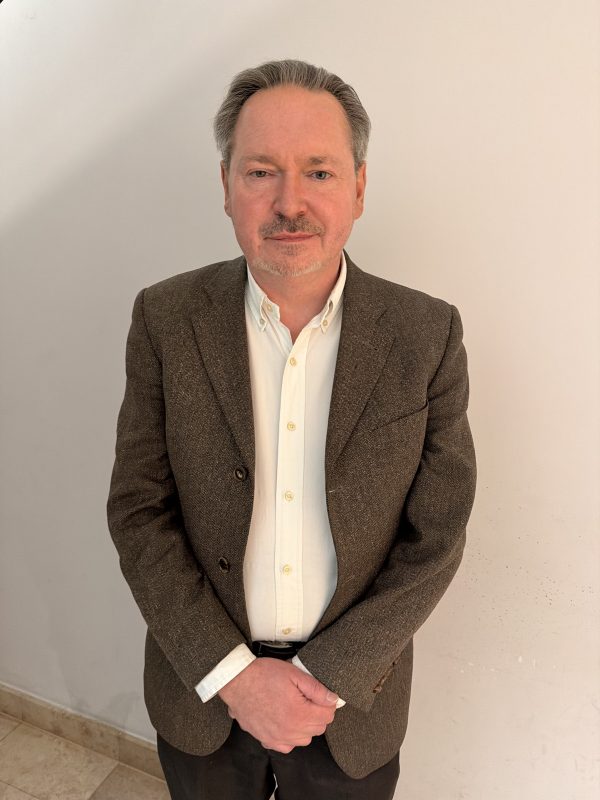
Poland in the European Power Dynamics Interview with Dr. Piotr L. Wilczyński by Sebastiano Giorgi

We spoke with Piotr L. Wilczyński, President of the Polish Geopolitical Society, about the new direction of U.S. policy under an entrepreneurial president, European countries, Russian influence, the consequences of the demographic crisis in the European Union, the prospects for China, and relations between Italy and Poland.
After 1989 and the end of the Cold War, we believed that the world divided by the Iron Curtain was gone for good. Do Putin’s actions in Ukraine signal a return to that reality and herald a new Iron Curtain?
I don’t believe a return to the Iron Curtain is possible today, primarily due to modern technology. Satellites, intelligence, hacking, and drones make many things visible, regardless of state intentions. Moreover, the role of states has diminished significantly, and many matters are now decided at the level of corporations and international organizations. Russia’s position has also weakened. During the Soviet era, it was the second most powerful state, rivaling the U.S. both militarily and economically. Today, it may still rank in the top five, but it’s no longer a major player on the global stage. However, it remains the top country in terms of nuclear warheads, which is an ultimate argument worth remembering.
What game are countries like Hungary, Slovakia, and Serbia playing today? Which European countries are currently most susceptible to Russian influence?
Russian influence is often discussed, but I don’t fully agree with that assessment in the case of Hungary and Slovakia. Serbia is a different story—it was at war with NATO only 30 years ago, and many current politicians remember those times as young soldiers. Such experiences leave lasting scars, and wartime trauma doesn’t disappear quickly. Furthermore, Russia played a key role in Serbia’s struggle for independence from the Ottoman Empire. As for Hungary and Slovakia, national interests are more relevant than direct Russian influence. Both countries have a shared interest in the Zakarpattia region of Ukraine, home to a Hungarian minority and Carpathian Ruthenians, who are supported by Slovakia. Hungary and Slovakia have openly opposed the EU majority’s position on supporting Kyiv in its confrontation with Russia and have adopted their own stance. Their decisions were driven by the protection of minority rights in Zakarpattia, which they believe are being violated by the Ukrainian government. This doesn’t mean their actions are in Russia’s interest, though Russia has certainly benefited from the resulting division within the EU. Still, Hungary and Slovakia don’t have enough influence to shift EU policy. If countries like Poland were to take a similar stance, the European majority might be destabilized, possibly leading to a more lenient approach toward Russia’s aggression.
Are there other European countries that might soon fall under Russia’s influence?
In Europe, one could look primarily at Orthodox Christian countries, but beyond Serbia, it’s hard to name any that might fall under Russian influence. The Moscow Patriarchate has significantly distanced itself from the mainstream of Orthodoxy. While Romania and Bulgaria are sometimes mentioned in this context, they can see the suffering of fellow Orthodox Ukraine. Russian influence in Europe is likely limited to countries with a significant Russian minority, such as the Baltic states. That minority might, in the future, influence democratic decisions in those countries.
If the war in Ukraine ended today, and some of its territory was annexed by Russia, how would the geopolitical landscape in Europe change? Could Warsaw become a central hub for Ukraine’s reconstruction?
I don’t think Warsaw would play a leading role in rebuilding Ukraine. International corporations will have a greater interest than individual states. Just like in Iraq, companies seeking reconstruction profits will likely set up offices directly in major Ukrainian cities like Kyiv or Odesa. A key question is whether Ukraine retains access to the sea. Russia has tried to take over Odesa, Ukraine’s main trading port. If the border ends up roughly along the current front line, and Odesa remains under Ukrainian control, it could indeed become a hub. Poland will likely continue providing political rather than economic support, as it was among the first countries to help Ukraine and continues to do so.
As for the geopolitical consequences, if the border aligns with the current front, the key factor in Ukraine’s future European role will be the scale of its losses, especially the permanent loss of Donbas and population outflows. Even if Ukraine retains cities like Kharkiv, its GDP could fall by more than half compared to pre-war levels. Many refugees will not return, and some who do may settle in Russian-controlled areas, reducing Ukraine’s population. As a result, a country that was once larger and more populous than Poland could become smaller. Peace will likely involve territorial concessions and resource extraction rights, potentially leading to a form of neocolonialism and hindering reconstruction. On the other hand, peace would allow Ukraine to focus on implementing reforms necessary for EU integration and joining NATO, which could ensure its long-term security—assuming both organizations continue to develop.
President Trump’s administration seems to take an ambiguous stance on the Ukraine war. What is really happening in U.S. policy toward the conflict? And is Poland beginning to see greater value in closer cooperation with Europe’s strongest countries? For years, Poland held onto a “myth of America” as a reliable ally and role model. Is that myth weakening, and is Poland reorienting itself toward Europe?
From a geopolitical perspective, the change in U.S. leadership has restored a prior order. President Trump’s policy follows the America First doctrine, prioritizing national interests over acting as a global “policeman.” Therefore, U.S. support for Ukraine under Trump is not unconditional—he ties it to specific terms. He saw that under Biden’s administration, huge amounts of aid were sent to Ukraine, but it remains unclear what happened to those funds. Committees were established to investigate, but no clarity has emerged. If Poland were investing on that scale—not just donating surplus military equipment or humanitarian aid—we would also want to know where the money goes. The level of corruption in Ukraine is enormous. More than half the funds were embezzled, and the Ukrainian administration has not taken action against those responsible. I believe this isn’t opposition to the Ukrainian government per se but to the waste of money. As a businessman, Trump takes a pragmatic approach—he prefers the U.S. as a coordinator rather than the main financier. Of course, media outlets opposed to Trump will portray this as a lack of solidarity, but that’s political posturing. Trump is a controversial politician, but Ukraine still receives aid, though it must also clean up its internal affairs. The situation is further complicated by the fact that Ukraine’s president should have completed his term by now, but elections haven’t been held due to the war. In such cases, power starts to resemble a dictatorship, which is typical in wartime, even in democracies.
The European Union is an ambitious political project. What are its future prospects? Is it heading toward something like the “United States of Europe,” or will it remain a confederation of sovereign states?
The EU—and its member states—are grappling with serious issues. The most pressing geopolitical challenge is the demographic crisis. If nothing changes, this will have a major economic impact over the next 30–40 years and could even lead to the EU’s collapse—Brexit was an early signal. Still, the EU holds enormous potential, but it is a democratic project, and in democracy, the majority rules. So the future direction depends on current political leadership. The economic crisis stemming from demographics is already visible—low GDP growth and declining global competitiveness. Meanwhile, countries like China, India, and Nigeria are gaining importance thanks to technological development and population growth. If Europe wants to reverse its decline in global rankings, it must prioritize resolving the demographic crisis. That is the main problem—not the climate, migrants, or eurozone issues. Those can be addressed in the short term, but demography requires long-term policy. Without children and future generations, Europe may face the same fate as the Roman Empire in its final decades.
If we combine demographics with immigration—do you agree with the opinion that without an influx of immigrants, Europe won’t be able to maintain its standard of living?
Exactly—but even with immigration, living standards will still decline. Importing labor won’t fix the demographic gap. To ensure generational replacement, you need more than two children per woman. In some countries, that number is less than half of what’s needed. To fill such a large gap with migration, you’d see a transformation in the ethnic and religious makeup of many countries. In some European cities, this is already evident. In practice, this means handing the country over to others, depending on the origin of the migrants. Another problem is that many immigrants are not workers. They don’t arrive as refugees or to work honestly. They come because Europe offers an attractive lifestyle. The idea of migrant labor assumes people come to work and then return home. But today’s migration crisis is not about workers—it’s about people relying on the welfare system. So they actually lower our standard of living because they contribute nothing while drawing from the shared budget. Therefore, we must clearly separate labor migration from general immigration. These are two different things, but many countries don’t distinguish between them legally.
From an industrial perspective, is the era of offshoring over? Is the world moving toward new barriers between countries?
Two key issues face industry today. The first is that European industry is being undermined by lobbies often funded from outside the EU—by Russia or China. These countries remain heavily industrialized and sponsor European organizations that, under the guise of environmentalism, attack industrial sectors. This leads to companies withdrawing from Europe and more legal restrictions on production. I once did an analysis of the mining industry. Mining in Europe is practically extinct. More mines are closing, and no new ones are opening—unlike in India, China, or Russia. Even the U.S. is opening new mines, including coal mines. Europe, however, is experiencing deep deindustrialization, directly impacting our quality of life—importing industrial goods is simply more expensive than making them locally.
The second issue is competition between domestic and foreign companies in the global free market, where European products lose out due to high labor costs and bureaucracy. On the other hand, Europe still has an edge due to its entrepreneurial spirit, high-tech innovation, and work culture. That could be part of the solution to the demographic crisis. As technology advances, demand for workers will decline while demand for robots—who require no financial support—will grow. There is hope in that. But are we, as a society, ready to work alongside AI-driven machines? It still sounds like science fiction, but given Europe’s demographics, we may soon have no other choice.
Does global instability mean some industries are returning to Europe despite previous offshoring? Is reshoring really happening, or just a temporary trend?
If Europe were a place of peace while wars raged elsewhere, we could talk about industrial return. But I doubt a third world war would occur without Europe’s involvement. Europe remains a key global player. Countries like France, Germany, and the UK can function as regional powers pursuing their own interests. But the EU plays an important role primarily due to the single market. To rebuild industry—reindustrialize—we must take a geopolitical view, especially regarding supply chains. Industry doesn’t function without raw materials—metals, coal, and other fuels. Yet in Europe, many of these resources are no longer extracted. Industrial agriculture in Poland, for example, is a shadow of its former self. Even with capital, without raw materials, industry will struggle. That makes supply chains crucial. Europe once had colonial powers; today, it may try trade agreements with regions like Mercosur. But is that beneficial for European farmers? Will local mining corporations be revived? Will countries regain production capacity? I think this is only a temporary trend in a few sectors. Reversing deindustrialization would require reversing current EU policies.
We often view China as a continually growing and developing country. Is that really the case? Won’t China eventually face serious problems, perhaps internal ones?
I can’t say whether in 5, 10, 15, or 50 years, but China will face a demographic crisis—it’s already beginning. India has surpassed China in population due to China’s former one-child policy. That policy and Chinese culture meant parents preferred sons if they could only have one child. Now, there’s a shortage of women. That means many men turn to military careers, which could lead to internal conflict—after the fall of the communist regime, China could plunge into civil war like in the 1930s and ’40s. Alternatively, to maintain power, the government might seek an external enemy and choose confrontation—possibly with the U.S., or closer still, with resource-rich but weakening Russia. They could also clash with rising India. Demand for Chinese goods is already declining as they become more expensive. Many firms are moving production to Vietnam, Laos, or other Southeast Asian countries because China is no longer as cheap. Living standards have risen, and Chinese workers no longer want to work for a “bowl of rice.” So I believe China will soon face problems similar to those now affecting Europe. But China is a single state with a very different regime—perhaps more comparable to the Soviet Union than to Europe.
Poland and Italy have long-standing cultural and religious ties, as well as various forms of cooperation. How do you assess the current state of Polish-Italian relations?
I believe that for the Polish government, Italy should be one of the key countries with which to build deeper economic ties. Looking at the map from a geopolitical perspective, Poland and Italy form an axis that runs across Europe, including good relations with smaller countries in between. Our cooperation could be a serious alternative to dominant players like Germany and France, which have their own problems. If we were to pursue reindustrialization in both Poland and Italy, we could trade raw materials and industrial components effectively. Trade between our countries could become a lever for political cooperation within the EU. If someone asked me where Poland should look for its closest European partners, Italy would definitely be one of them.