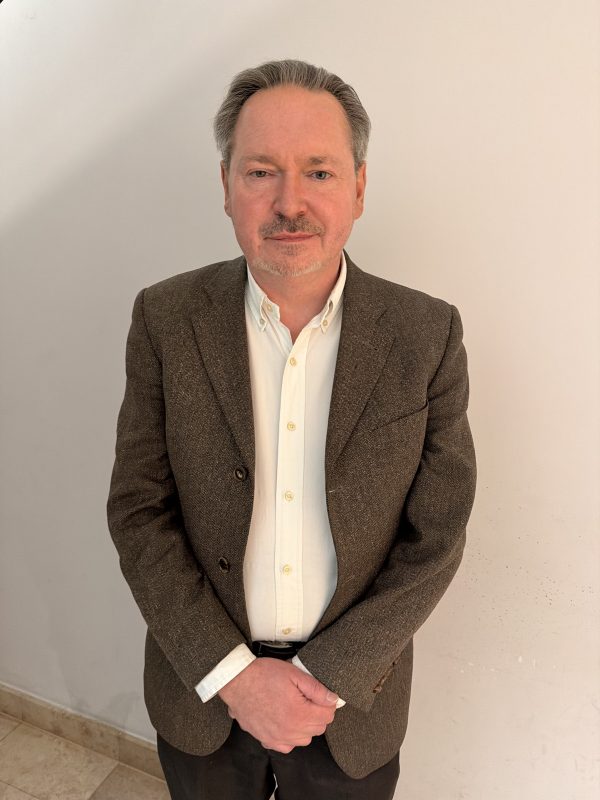
Jarosław Macała: Europe Can Be Saved Through Greater Democracy and Reform of the Decision-Making Process by Sebastiano Giorgi

Conflicts in Ukraine and the Middle East, the great uncertainty surrounding Africa, the rivalry of global powers, and the future of Europe and Poland—these were the main topics we discussed in a conversation with Prof. Jarosław Macała, an academic lecturer, historian, and political scientist. He completed his study in history at the University of Wrocław, earned a doctorate in humanities with history as majors, and in 2004, he obtained his qualification for professorship in the same field at the Faculty of Humanities at the University of Zielona Góra.
The effect of war in Ukraine on dynamics among allied countries: What has it changed in Europe’s security and NATO’s internal relations?
The war in Ukraine has ended the so-called peace dividend in Europe—three decades of relative calm after the Cold War. This had convinced political elites and societies, especially in Western Europe that the continent was safe and military spending was unnecessary. Economic interests had become the priority, not military security. Another shock was the realization that Europe is indeed under threat. This is not about terrorism or distant conflicts in which European countries, especially NATO members, participated, but about a real, nearby threat from Russia. This requires a shift in thinking among both political elites and societies, particularly among the generation raised after 1991—a generation that is well-fed, prosperous, pacifist, and lacks experience with military threats. There is no doubt that this will change relations within Europe. Primarily because, if we take the Russian threat seriously, the greatest risks—but also opportunities to increase their standing in Europe—lie with the eastern flank countries, which have experienced Soviet domination, including Poland. Until now, NATO has been dominated by Western European countries, which previously did not feel threatened and reduced their armies to a minimum. Disarming can happen quickly, but rearming is a multi-year process. However, rearmament entails enormous expenses that will inevitably, sooner or later, impact the standard of living of societies. Politicians try to convince people that everything can be reconciled: increased consumption and rising military spending. This may be an illusion. The crisis has also revealed that NATO in recent years was prepared more for expeditionary wars (like in Iraq or Afghanistan). A striking example is the Netherlands, which in 2011 completely abandoned having tanks. Even in Poland—due to years of neglect and the military’s focus on expeditionary goals, which were also part of the political elites’ servility toward the U.S.—the army today lacks real capabilities to defend its own territory. NATO’s internal architecture is also changing—it is a must, since Russia is now considered the most serious threat. This necessitates a new and greater role for post-communist European countries, including Poland, which is the largest and strongest country in the region.
In this complicated situation we’re discussing, what path should Europe take to become more effective and truly strong? Should it introduce majority voting instead of unanimity, or perhaps also integrate the Balkans into its structure?
The European Union today faces the need for profound reforms in structure and governance. The more countries in the Union, the harder it is to make quick and effective decisions, especially when the interests of individual countries diverge. The EU, notorious for its bureaucracy and sluggishness, needs to streamline decision-making processes, perhaps even reform the European Commission, where the presence of a commissioner from each country makes the institution less manageable and more bloated. The need for greater democracy within the Union is also becoming increasingly apparent. Anti-EU sentiments stem from citizens’ feeling that they have no influence over what happens at the European level, which in turn breeds distrust of political elites and the shifting of responsibility to Brussels. The current tight integration of the EU is increasingly being questioned. The question is whether a return to a looser form of cooperation is possible, especially in political and value-related matters, which could be a condition for the Union’s survival. History shows that many unions have collapsed when one member began treating it as a tool for its own politics and sought to dominate the other partners. Today, the EU is dominated by the Franco-German tandem, though its dynamics have weakened. Still, Germany largely decides many issues, which is often seen as unpopular among smaller countries. On the horizon, two extreme visions are emerging: the long-discussed but unlikely federalization of Europe, and the loosening of the Union, which—paradoxically—could weaken smaller countries, as it is the central institutions like Brussels that counteract many manifestations of dominance by the largest countries. In Poland, this paradox is particularly visible—some political elites want a return to a Union of sovereign nation-states, but the consequences of this approach are still not fully understood.
What role should the Western Balkans play in this matter?
The issue of EU enlargement to include Western Balkan countries is twofold. On one hand, these countries must clearly and genuinely strive for integration, which raises doubts in the case of some of them. On the other hand, the Union itself does not seem ready for this today. Since the intervention in Kosovo in 1999, this process has been exceptionally slow, with minimal real progress. Although there are declarations about accelerating the accession process—for example, during Antonio Costa’s recent visit to the region—these do not stem from the EU’s internal determination but from growing geopolitical pressure. A key factor is the increased activity of Russia (and China’s economic offers) in the Balkans, visible in Serbia or the attempted coup in Montenegro, which was backed by Russian services. However, it must be remembered that the countries of this region are internally diverse—some raise serious doubts about their level of democratization. Some function as hybrid systems rather than full-fledged democracies, which contradicts the Union’s values. The EU must first resolve its own internal problems before it can realistically open up to enlargement. Only the threat from Russia may force the Union to accelerate this process.
Moving beyond Europe, we are witnessing a historic rivalry among the greatest powers: the United States, Russia, and China. How do you assess the current position of these countries—who is gaining influence, and who is losing it?
Russia can hardly be considered a global or superpower. The USSR undoubtedly was, but contemporary Russia lacks sufficient potential, though it undoubtedly desires it. Today, geopolitical rivalry is primarily concentrated between the United States and China. What is interesting is that during the Cold War, when the world was divided into two blocs—the USSR and the U.S.—these countries were weakly connected economically and differed diametrically in their political and economic systems. Today, however, we see a very tight economic symbiosis between Beijing and Washington, which is undoubtedly a problem in the event of conflicts. Both superpowers also face internal and external challenges. China, despite continuous growth, has serious structural problems, such as one of the world’s fastest aging populations—a consequence of the one-child policy—as well as ecological issues. China has already surpassed the U.S. in terms of GDP, though it has a much larger population—about 1.5 billion compared to 340 million in the U.S. According to forecasts, China may overtake the United States in GDP per capita around 2035–2040, which in the context of a rapidly changing world is a rather distant and highly uncertain prospect. Currently, however, the U.S. retains military and geopolitical superiority, though in regions critical to the U.S.-China dispute, such as Asia, the situation looks different. In recent years, the Americans have focused on the Asia-Pacific region, gradually reducing their engagement in Europe—a process that began under Barack Obama.
In the context of this global rivalry, what role does Africa play? Can it be said that the continent has become an arena of economic struggle or a new form of colonialism among the great powers?
Africa is a vast continent with the world’s fastest-growing population and enormous natural resources, yet it is politically unstable in many regions, torn by disputes and wars, some of which are the terrible legacy of colonial rule, which, for example, drew borders with rulers and protractors, disregarding local populations. After the Cold War, when rivalry between the blocs was intense in Africa as well, the continent lost its strategic significance. This is evident in the West’s near-total disinterest in Africa after the Cold War, which contributed to numerous conflicts and wars. Today, it is an unstable continent. More than half of the so-called “weak states” in international rankings are in Africa. Only recently has the West realized that it has lost influence to China, which is investing heavily in the continent, primarily in infrastructure—roads, bridges, stadiums—often on credit, with Chinese workers brought in instead of local labor. China is also systematically seeking control over many deposits of key raw materials, which requires building closer political ties with African states. Russia is also trying to increase its influence, though its capabilities are far more limited. It must also be remembered that Western European countries, the former colonizers, have a terrible reputation in Africa—at the beginning of the 20th century, almost the entire continent was under their control. Back then, there were only two independent countries in Africa—Ethiopia and Liberia. China’s and Russia’s approach to Africa differs from the West’s in that it is not tied to political conditions. Both countries focus primarily on the stability of the authorities. Africa is thus becoming a clear field of rivalry. For example, the French—who for decades maintained influence in the Sahel region—have begun to withdraw. In their place, the Russians are appearing, including the so-called Wagner Group and other military corporations, whose presence is mainly centered around securing resource extraction. Europe also has an additional reason to be interested in Africa—migration. The United States is geographically much farther away, while for Europe, this is a very real issue. Most migrants arriving on the continent are from Africa, not just North Africa. Therefore, stabilizing Africa is not just a geopolitical challenge—it is a direct internal problem for political elites in Europe.
I know this is an incredibly complex topic, but do you see any realistic scenarios for ending the Israeli-Palestinian conflict in the Middle East today?
Since 1948, no one has managed to resolve this conflict, and I don’t think that will change anytime soon. There are no signs that this conflict will end quickly. It is a very complicated tangle of geopolitical, religious, and social issues. Additionally, this conflict has been and continues to be skillfully exploited by powers outside the Middle East, which interfere in it. During the Cold War, it was primarily the Americans and Russians who supplied weapons and provided economic and political support to the parties involved. After the Cold War, especially since the second decade of the 21st century, the U.S. lost interest in the Middle East due to the shale revolution and reduced oil imports. Previously, the region was crucial because of energy resources. However, the invasion of Iraq and the attempt to impose democracy there led to serious destabilization of the entire region, the effects of which persist to this day. It is very hard to believe that the conflict will end. I see no prospects for that.
Has Donald Trump’s policy changed Poland’s approach to the United States? Does Poland feel more tied to Europe today than before?
With Trump, the problem is that unpredictability is his brand. Economically, Poland is strongly tied to the EU, but its security guarantor remains NATO, and above all, the United States. However, it must be remembered that Poland and the U.S. operate in completely different perspectives: Americans pursue global politics, while Poland at most regional politics. For Poland, the threat from China is an abstraction—the real danger is Russia, with which we share a border. For the U.S., a far more serious strategic challenge is China, on which Trump will likely focus the bulk of his geopolitical attention. In this game, he may want to use Russia as a tool. Russia is one of China’s key suppliers of raw materials, as China has deficits in, for example, oil and gas. Land routes are used here, which are much harder for the U.S. to block than sea routes like the Strait of Malacca. Poland remains militarily dependent on the U.S. and its security guarantees. If the Americans concede to Russia, NATO may reduce its engagement in the region, weakening Poland’s security. Poland must build a partnership with the U.S., not rely on subservience or even sycophancy (as Radosław Sikorski called it in leaked conversations), which does not earn their respect. Trump will likely try to shift the costs of any potential deal with Russia onto Ukraine, but it is unclear whether Poland and other countries in the region will also bear them. With NATO ties loosening and Trump’s declaration that “those who don’t pay won’t be defended,” the question arises whether Western Europe can handle its own security, especially since EU military plans are long-term and uncertain. Poland, meanwhile, is strengthening its security and ties with the U.S. by purchasing large quantities of American equipment, though it is also becoming technologically dependent, as the Americans control key weapon systems.
As an expert on Polish-German relations, how do you assess Poland’s image as a culturally and religiously homogeneous country, while at the same time the number of migrants from Ukraine and Asia is growing, the population is declining, and the Jewish community is gradually regaining its presence? How might these phenomena influence the further development of society?
Poland has never been culturally homogeneous—the Second Polish Republic was multinational, but after Yalta and Potsdam, the People’s Republic of Poland and the border changes made it almost monoethnic, with over 90% Poles. After 1989, new migrations emerged: the first group consists of culturally close Ukrainians and Belarusians, who adapt more easily despite political tensions. The second group is Chechens, who have adapted well in our country. Currently, large numbers of migrants from culturally and civilizationally different regions are arriving, such as from Asia—Bangladesh, Pakistan. They face much greater difficulties in adapting, and Poland is often a transit country for them. It is worth noting that Europe is facing a demographic catastrophe. Without migrants, the economy and society will struggle to survive due to a lack of labor. Unfortunately, Poland has not developed a coherent migration policy. There is no strategic document defining whom and why we should accept, or how to integrate or assimilate them. Poland focuses on border protection, such as building a wall on the border with Belarus, but physical barriers will not stop migration. The key is to control and manage it—attracting migrants who genuinely support the economy and society. Migrants are essential for the labor market, so a system enabling their integration and rooting in society is needed. In Poland, the belief that migration is undesirable still dominates, and the topic is demonized by politicians exploiting people’s fears. This short-sighted approach may bring serious demographic, economic, and cultural consequences in the future.
As for the Jewish community, before the war, Poland had one of the largest Jewish communities in the world, numbering about 3.5 million people, or about 10% of citizens. The Holocaust and post-war migrations almost completely destroyed it. Today, this community is slowly reviving, though anti-Semitism unfortunately still exists. However, criticism of Israel’s policies must be distinguished from anti-Semitism. Poland, as a historically multicultural country, should view Jews as a natural part of society. Younger generations of Poles are more accepting of diversity, though experiences with migration in the West raise concerns about uncontrolled influxes. This shows how much Poland needs a thoughtful and consistent migration policy.
The European Union, and especially Poland, is intensively rearming. Can such actions prevent a future conflict between NATO or the EU and Russia, or will they rather escalate tensions?
The war in Ukraine has shown that Europe is no longer safe and peaceful, and international guarantees prove to be of little value. Claiming that Russia is weak and does not threaten Europe is misleading—we must prepare for a serious threat. However, changing mindsets is the hardest part. For years, Europeans were convinced that nothing threatened them, so it is difficult now to expect them to accept rising defense spending and the need to prepare to defend their own country and Europe. Meanwhile, Europe must stop relying solely on America and start defending itself, because American assistance is not guaranteed. If you want to defend yourself, you must first do it yourself, not just count on allies, because they have their own interests and decisions. The history of Poland in 1939 reminds us that allies can fail. Europe has the financial, military, and technological resources to defend itself—what is needed is political will and a change in the mindset of many Europeans. Without this, a sense of security cannot be built. The threat is real and close, especially for countries like Poland. Therefore, it requires collective, solidary cooperation and the protection for all. In the West, the British were the quickest to understand the threat from Russia, though they are no longer in the EU.
Years of limited defense spending and army building have resulted in delays in preparing for a real threat. Despite attempts to negotiate and treat Russia as a “normal partner,” the war in Ukraine has shown that in Europe, the law of force once again applies—there is no room for concessions, which only embolden the aggressor, reminiscent of the mistakes of the policy toward Hitler in the 1930s. Rearmament is necessary today, though the decision to increase it is economically and politically costly—it requires societies to accept unpopular measures, which is difficult in pacifist societies unaccustomed to threats. Changing mindsets requires the role of elites and true leadership, which sometimes makes difficult and unpopular decisions, rather than being guided solely by polls and public sentiment. Another problem is the lack of defense integration in Europe, which complicates logistics and increases costs, while coordination and standardization would be simple and economical. The dream of peace and the peace dividend must give way to responsibility and the necessity of defending Europe against a threat emanating from the continent itself, not from distant regions.