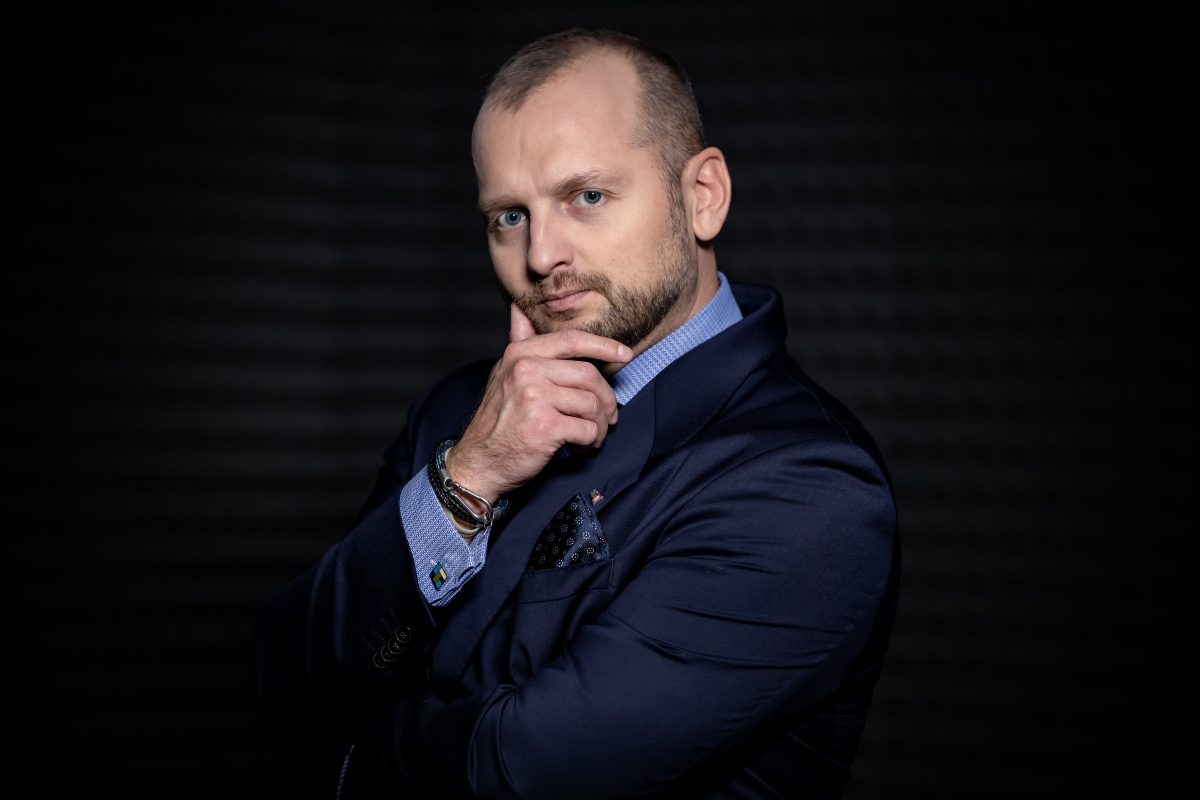
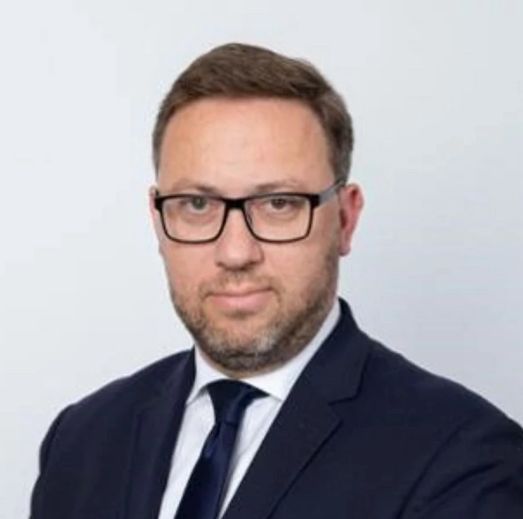
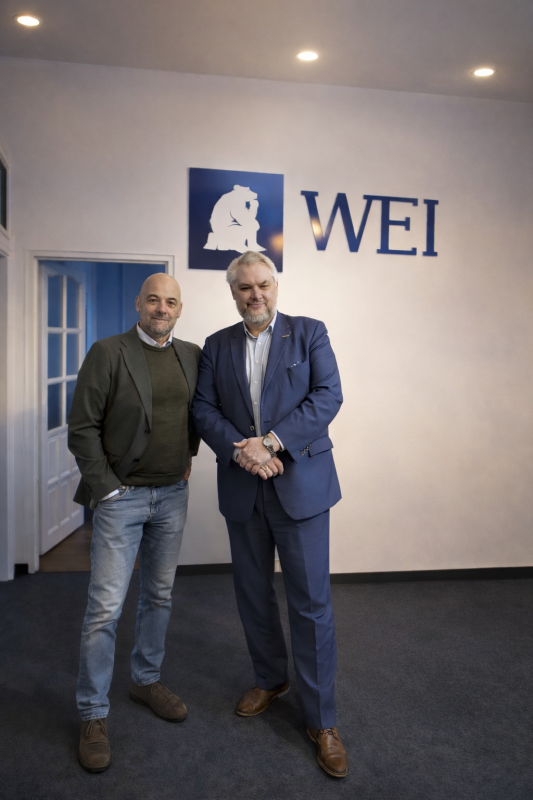
Jacek M. Raubo is the head of the analysis department at Defence24. He is an analyst, journalist, and academic lecturer. He specializes in various aspects of modern state security and defense, including the impact of new technologies on the defense sector. He has participated in numerous conferences and industry symposia in Poland and Europe and is a regular commentator in national and international media.
Dr. Raubo, let’s start bluntly: in your opinion, was the war with Iran necessary, or is it merely a tool for mass distraction?
The official reason for the attack is to disarm Iran and prevent it from posing a threat to Israel and the United States. However, we lack certain information about the real level of danger coming from the authorities in Tehran. The data presented by the Americans and Israelis is naturally filtered. We only know what they want us to know. The true answer will only emerge later, when authentic and in-depth analyses based on declassified sources become available.
The technological and air superiority of the USA and Israel is undeniable, but are we sure that this is enough to change the regime in Iran? And if a ground attack were necessary, wouldn’t there be a risk of a “new Vietnam” for the USA?
Let me start with the second part: no, there will be no second Vietnam or second Iraq. Referring to the Vietnam War implies ground forces trapped in enemy territory, and that will not happen. However, the conflict may indeed drag on and become a harbinger of large-scale terrorist activities.
The first response scenario involves deliberate attacks by Iranians and their allies, including proxies such as the Houthis, Hezbollah, and various terrorist organizations worldwide. The second is paralysis of the Persian Gulf region, particularly in terms of gas and oil transport. We could see a repetition of Houthi actions from Yemen, but on a much larger scale. In the Strait of Hormuz, the Americans could indeed face a kind of “maritime Vietnam”—numerous low-cost attacks targeting not only military objectives, but also civilian transport. This would require ensuring the safety of goods and crews at enormous cost (the interview was conducted before Iran officially blocked Hormuz).
As for regime change in Iran, it will certainly not occur in a way appealing to the Americans: bombings, “decapitation” of the regime, people taking to the streets, and the establishment of a new government signing economic cooperation treaties with the USA. I believe the unrealistic nature of this scenario was clear even in Washington. There are leaks suggesting that the CIA assessed airstrikes alone cannot trigger regime change.
However, regarding military objectives, the matter is simpler—starting with limiting Iran’s ability to produce or develop nuclear weapons. Another aspect is depriving Iran of certain branches of its armed forces. We are observing the near-total destruction of its air force, as aircraft are difficult to replace. To understand this, consider that even if China decided to fully rearm Iranian aviation, it would not be quick, cheap, or simple. A pilot killed in a Yak-130 is a soldier with hundreds of flight hours. Training new pilots and adapting them to new machines requires massive time and financial investment.
The Iranian navy is also vulnerable—surface vessels are easy to track and sink. For the first time since 1945, a U.S. submarine attacked a surface target using torpedoes. Missile systems are also key targets, especially launchers, which are a bottleneck. If you have missiles but no launchers, they remain on the ground. Iran can try to mitigate this with hidden underground sites, but these too can be detected by satellites and drones.
In my opinion, the long-term factor influencing Iran’s political future is the cost of war. Training someone to operate missile systems takes about a year. If Iran already faced major budget problems before the war, these pressures will intensify. I do not believe—and I’m willing to bet—that after the war, Revolutionary Guard leaders will say: “Now we focus on citizens’ welfare instead of armament.” On the contrary, they will say: “We need more missiles and shelters.” That costs real money. Therefore, the U.S. and Israel are betting on internal economic and social pressure.
Do you believe in the possibility of an internal revolution?
The USA and Israel aim to create conditions that could force such changes later. After the airstrikes, the country will be structurally weak economically. Even with Chinese support, stability will remain uncertain.
But as a non-democratic country, like Russia, won’t they prioritize armament over citizens’ welfare?
They might, but Iranian society is deeply divided. If the regime slogan becomes “build missiles instead of baking bread,” the risk of unrest becomes real.
Let’s change the scenario: do you think a Palestinian state will emerge?
If Israel wants to strengthen cooperation with Arab states after the war, it must offer them something in return. This pragmatic policy will require concessions toward Palestinians. The question is how extensive these concessions will be, given Israel’s internal political divisions and after 2023 even more radical.
Let us discuss Donald Trump. The facts suggest that the strategic objective behind his decisions appears to be directed against Europe: tariffs, the issue of Greenland, a certain withdrawal from the war in Ukraine, and even a potential conflict in Iran, which carries the most severe energy consequences for European countries. Is the weakening of Europe truly Trump’s objective?
Trump is undoubtedly reshaping transatlantic relations in favor of the United States. He has never concealed his intention to extract benefits from every relationship—whether with the Indo-Pacific region, the Western Hemisphere, or Europe. These gains come at the expense of existing frameworks of security and economic cooperation. In my view, such military actions are primarily intended to intimidate economic partners. The security of every country is being transformed under the influence of new technologies and AI.
I found it amusing when Trump proposed the idea of taking control of Greenland, and the entire world immediately began envisioning a war scenario. It seems to me that both sides of the Atlantic are mutually dependent and fully aware of this, particularly within NATO. Furthermore, the United States faces upcoming midterm elections to Congress, which approves the defense budget. This is where the president encounters real constraints, so I would refrain from apocalyptic visions regarding US–Europe relations until after these elections. Additionally, the United States faces internal challenges—related to infrastructure and reindustrialization. To address them, the US needs international partners, with Europe being the primary one. Therefore, regardless of whether it is Trump or another leader, no US government will truly be able to fundamentally undermine relations with Europe.
On the other side of the Atlantic, Europe also faces many internal challenges, above all a clash between countries striving for greater integration and those opposed to it.
It is true that many European countries, especially those from Eastern Europe, see the United States as their global point of reference. However, I believe that Europe still has a chance to find a balance between its internal interests and its relations with the US. Some countries, however, will not allow Europe to achieve full strategic autonomy, fearing that it does not offer real potential. France, in my opinion, has so far benefited the most as a country that has for years offered concrete political and military solutions, but it too has its budgetary limitations. If France is to take responsibility for nuclear deterrence, it will need to increase not only the number of warheads but also the systems used to deliver them. These are enormous challenges for the French budget.
I have a sense that we are in an unstable situation, as emotions are driving certain narratives, but sooner or later NATO will stabilize. The core of these relationships remains intact regardless of who is in power. I am optimistic about this, although I know that everyone will play hardball. Today there is less diplomacy and less masking. The emergence of Trump has shattered these diplomatic shields.
Everyone acknowledges that Poland is experiencing its “golden age,” a period of extraordinary growth thanks to the common market and EU funds. And yet, there are forces that openly speak out against the European Union.
No one questions the validity of the path to EU accession; it is the foundation on which we have built today’s Poland. However, in today’s climate of international tensions, spaces for political debate—sometimes radical—are emerging within Polish society. This polarization for or against Europe will become rooted in public opinion, but it does not frighten me. I believe that within this European space, based on democratic principles, we have the resources to deal with such crises.
Let me recall the issue of communist parties in Western Europe in the 20th century. There were fears that they would seize power and turn countries into satellites of the USSR. This did not happen, but space was created for these views to function within democratic debate. Today, the worst thing would be to forcibly silence certain topics or exclude people with different views from the debate. Issues such as migration, border protection, or the direction of integration must be discussed publicly; otherwise, radical extra-parliamentary groups will emerge, which would be dangerous. As a political scientist, I argue: the more we are able to discuss any topic using institutions such as referendums and elections, the safer we will be.
In the context of Polish society, I have always been struck by Poles’ fascination with the United States. A few years ago, there was even talk of creating “Fort Trump.” In light of the current president’s policies, is this fascination still relevant?
The answer is complex. On the one hand, there is an emotional dimension: years of building the image of the United States as a supporter of Poland (Reagan, John Paul II, assistance after the fall of the Iron Curtain). From a pragmatic perspective, after joining NATO, Poles noticed that the only military structure ready for real action was the American one. Poland relies heavily on U.S. military strength because we know where we are located on the map. American soldiers are physically present here, with bases such as Camp Kościuszko in Poznań or the base in Powidz. In Poland, we have around 11 U.S. Army locations. Where do European countries have their bases? As Poles, we do not have to choose between the U.S. and Europe; we want both of these pillars to be strong within NATO. Europe still has a lot of catching up to do in terms of the quality of its weapons. A good example of cooperation is the presence of Italian ships in the Baltic Sea—this is the path to follow, perhaps by building European military bases in Poland.
Will Europe, in order to become a major power, need to equip itself with an arsenal comparable to that of the U.S., Russia, and China?
Europe must place military strengthening on its agenda, because an imperialist, radical, and armed Russia is a reality we will have to live with. We need both qualitative and quantitative superiority. For example, the size of land forces in Europe is insufficient. Poland is trying to increase the number of troops but faces demographic challenges. I am not surprised that Donald Trump is angry and is calling for 5% of GDP to be spent on defense.
But the U.S. does not defend us for free; it has its own economic interests.
Of course. Increasing defense spending is also an opportunity for European arms production and new technologies. Some advanced systems, such as the F-35, we will still have to buy from the U.S., because we simply do not have them. Americans also need the European market, especially as countries like India and Saudi Arabia are increasingly focusing on their own production (programs like “Made in India” or “Saudi Vision 2030”).
Russia–Ukraine: what have these four years of war shown, regardless of who is winning?
That we must leave our comfort zone: war is possible. Today, no international agreement provides full guarantees. Russia has shown that force can be used without ultimate strategic consequences—the Russian state still functions and is not completely isolated. This is a lesson for everyone. We must accept that this conflict will sooner or later enter a phase of stalemate.
Unfortunately, regardless of who governs in Moscow, there is a high probability of further conflicts. This is a threat not only to Poland, but also to northern countries, Mediterranean countries, and Africa. In Russia, this is a matter of veterans, radicals, and so-called “Z supporters.” Today, military imperialism is already being taught there in kindergartens. This will shape the psyche of the next generation, which will demand victory from its leader. This is what I fear most and what we must be prepared for.
One final question: how should we define the era we live in? In the 20th century, people believed in ideals that united society; today, citizens seem to be hyper-individualists.
In my opinion, the conversation between Putin and Trump in Alaska symbolized the end of 20th-century standards. Americans realized that they are no longer the only true actor on the international stage; they must build relationships differently—with Europe, India, or Asian partners. There is no such thing as a “Cold War 2.0”—this world is far more unpredictable. We live in a multipolar world, which requires experts and philosophers to reinvent political tools.
From a citizen’s perspective, we feel less free and more fragile. We no longer feel the power to unite and change the world according to our dreams. On top of this, there is technology, which can atomize human relationships and enable the monitoring of vast populations. This is the “syndrome of Chinese solutions” being transplanted elsewhere—and this is what we should be most concerned about.